Cold Outbound Isn't Dead in 2026, It Just Got Harder
Cold outbound reply rates fell in 2026, but the channel isn't dead. Learn why warm signals alone can't replace cold outreach for pipeline growth.
Is cold outbound actually dead in 2026?
No, but it got harder, which is a different claim. Cold email reply rates have dropped to roughly 3.4% on average, down from about 5.8% in 2024, per B2BNN's outbound data. A crowded channel is not a dead channel. Most of what died was lazy list-and-blast, not the act of reaching a stranger who might actually need you.
Why do the reply-rate numbers look so grim right now?
Because most cold outbound today is generic. Updately puts typical cold outreach reply rates at 1 to 3 percent, and SpurIQ has cold averaging 3.43%. Those numbers describe a list built from firmographic filters with zero personalization, sent through an overused inbox category. The number is grim because the practice behind it is grim, not because prospects have stopped answering messages.
Isn't signal-based warm outbound just better?
For reply rate, yes, and we won't pretend otherwise. Updately reports signal-based warm campaigns hitting 15 to 45% replies, SpurIQ cites 15 to 25%, and Buska describes warm outperforming cold by 5 to 10x. If someone just posted about your exact problem, message them. But signal-based outreach only covers the slice of your total addressable market showing intent this week. Most of your market isn't raising its hand right now.
Then why keep doing cold outbound at all?
Because warm signals don't create new demand, they just catch demand that already exists. MarketLauncher's framing is the right one: warm leads convert faster, cold outbound creates new pipeline. A motion that only reacts to signals eventually runs out of accounts showing signals. Cold outbound is how you build the next quarter's warm list instead of just harvesting this quarter's.
Does LinkedIn cold outbound behave like cold email?
Not really. LinkedIn attaches a real identity, a photo, a job title and mutual connections to every message, which changes how strangers respond. Gelee's published benchmarks put connection accept at 20 to 30%, first-message reply at 12 to 18%, and follow-up reply at 5 to 8%, landing near a 3 to 5% meeting rate per invite. See our full breakdown of the invite-to-meeting path.
How do you keep cold LinkedIn outbound from tanking your account?
You cap volume and vary your language, same as any channel with a reputation system. The safe range is 20 to 25 invites a day on a warm, established account, and 5 to 10 a day while ramping a new one. Push past that and acceptance drops fast, which is most of what changed for organic reach too, covered in why LinkedIn reach fell 50%.
What does it cost to run cold LinkedIn outbound well?
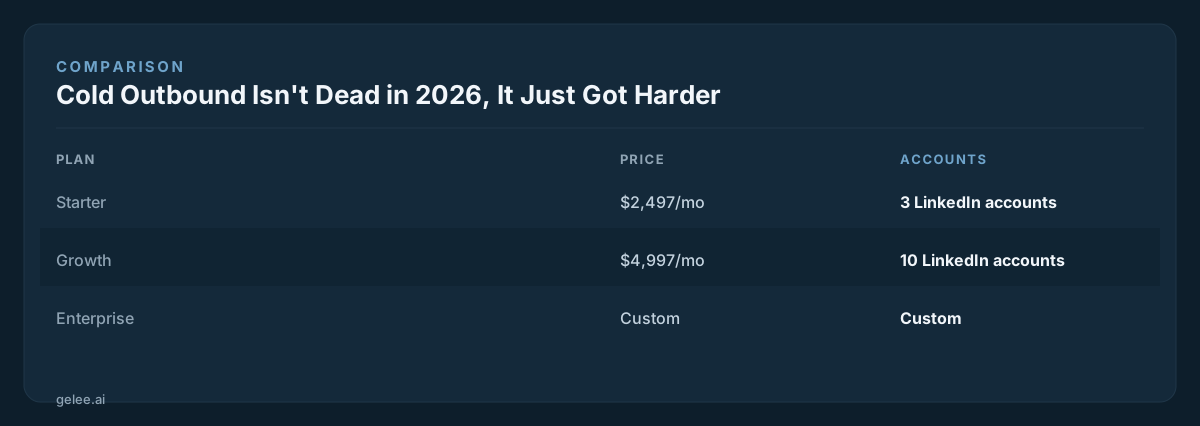
Cold LinkedIn outbound done well is a monthly retainer, not a few dollars a seat. Gelee's plans cover three or ten LinkedIn accounts, with enterprise plans above that, and pricing is shared on a demo call. Every plan carries a three-month minimum and starts with a 15-minute setup call, no self-serve signup.
| Plan | Price | Accounts |
|---|---|---|
| Starter | Custom | 3 LinkedIn accounts |
| Growth | Custom | 10 LinkedIn accounts |
| Enterprise | Custom | Custom |
Gelee runs on a 3-month minimum, there's no self-serve signup, and setup takes about 15 minutes with our team. That's not a fit for someone who wants to swipe a card and send 50 messages tonight. It's built for teams running this as a real channel, with replies in the client's voice and objection handling pulled from their own playbook, not a generic script.
Who should skip cold outbound and lean on warm signals instead?
If your total addressable market is small and mostly already engaging with your content, comments or product, work that pool first, the reply math favors it. Cold outbound earns its keep once your market outgrows your pipeline of engaged accounts, true for most B2B companies past their first few hundred customers. See our side-by-side on cold email vs LinkedIn.