Can Recruiters Use Gelee for Candidate Outreach?
Gelee's mechanics work for recruiting, but the script changes. Here's how candidate outreach differs from sales and when the pricing makes sense.
Can a recruiter actually use Gelee?
Yes, but the message is a job pitch, not a sales pitch. A sales SDR opens with a pain point and a value prop. A recruiter's first message opens with a title, a comp range, and one line about the team. The mechanics, connection requests, replies, objection handling, meeting booking, stay the same. The script changes completely.
How is candidate outreach different from sales outreach?
A sales prospect is deciding whether to spend budget. A candidate is deciding whether to risk a job change. Recruiters also work for the employer, not the candidate, so the person on the other end is naturally guarded about whose interest you actually represent. That guard has to be addressed in the first two messages, not the fifth.
A sales message can wait until message three to name a specific outcome. A recruiter message that waits that long reads as vague and gets ignored, because a candidate weighing a career move wants the title and comp band up front, not a warm-up.
What does a message sequence actually look like in Gelee?
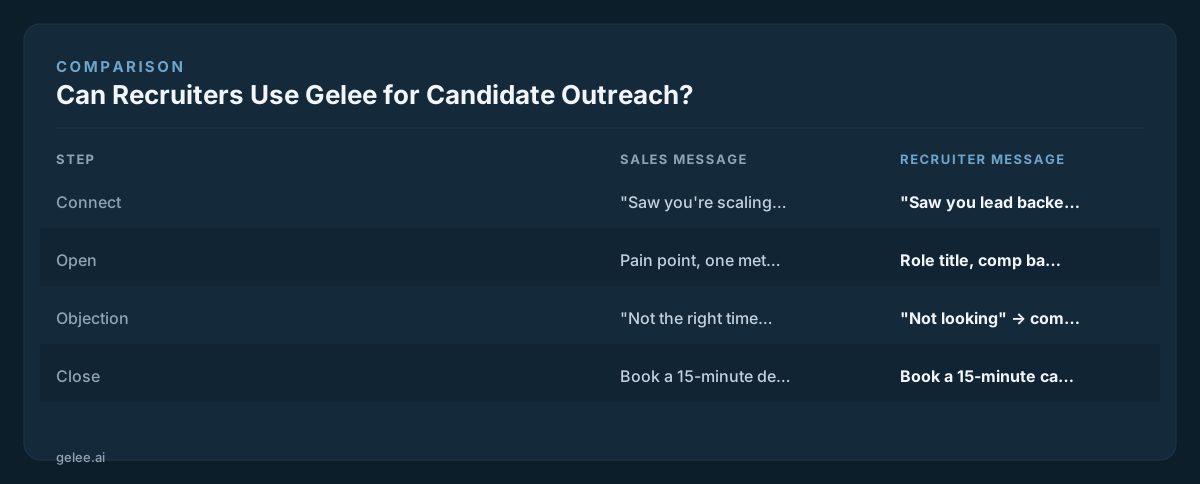
The four-step shape is identical to a sales sequence: connect, open, handle an objection, ask for time. Only the content changes. Here's how the same four steps read differently depending on who's reading them:
| Step | Sales message | Recruiter message |
|---|---|---|
| Connect | "Saw you're scaling outbound at [Company]" | "Saw you lead backend eng at [Company]" |
| Open | Pain point, one metric | Role title, comp band, remote policy |
| Objection | "Not the right time" → ROI case | "Not looking" → comp or growth case |
| Close | Book a 15-minute demo | Book a 15-minute call |
Can Gelee handle "not looking right now"?
Yes, if you already have a real answer to give. Objection handling in Gelee runs off your own playbook, not a generic script. If your actual answer to "not looking" is a specific comp number or a promotion timeline, Gelee sends that. If your team's real answer is "just keep an open mind," the automation exposes that gap instead of fixing it.
Is Gelee worth it for a solo recruiter?
For a recruiter running two or three searches a month, no. That's 20 to 40 candidates to source, not enough volume to justify the tool, the same math laid out for solo operators in Is Gelee Worth It for Solo B2B SaaS Founders?. A staffing desk running five open reqs and 200-plus candidate touches a month is a different buyer entirely.
That desk usually means multiple recruiters on multiple LinkedIn seats, which is a separate problem from the messaging itself, covered in Running Gelee Across Multiple Client LinkedIn Accounts Safely.
Does high-volume outreach make candidates feel spammed?
Some will notice. LinkedIn is full of templated recruiter messages, and writing in your voice doesn't erase that. Gelee caps safe volume at 20 to 25 invites a day on a warm account, 5 to 10 on a new one, the same limits used for sales accounts. The cap lowers restriction risk. It doesn't make the message less automated.
Does the Post Commenters preset work for recruiting?
Yes, and it fits recruiting better than most sales use cases. Post about an open role or a hiring trend in your specialty, and Gelee DMs everyone who comments, then replies publicly once the DM is confirmed sent. Commenters have already raised a hand. Reply rates on that list tend to run above the 12-18% baseline Gelee sees on cold first messages.
Who should not use Gelee as a recruiter?
An in-house recruiter filling two roles a quarter through an ATS and referrals has no outreach volume for this to solve. Neither does a recruiter whose real value is resume coaching and interview prep, work Gelee doesn't touch. Gelee replaces outbound messaging and reply handling, not the advisory conversations that follow, the same line drawn in Does Gelee Work for Consultants and Coaches on LinkedIn.